


| Welcome to Arnoldsat.com | Today is | |
||||||||||||||
|
|
|
|
|
|
|
|
|
|
|
|
|
|
|||
| Satellites |
 The letters NASCAR stands for National Stock Car Auto Racing. It is a racing league in the USA. NASCAR is a sanctioning body in the United States. The three largest racing series sanctioned by NASCAR are the Sprint Cup, the Nationwide Series and the Craftsman Truck Series. In total, NASCAR sanctions over 1500 races at over 100 tracks in 39 US states, Canada, and Mexico. Unfortunately I have never witnessed a NASCAR event in person, but I follow the Cup series on a regular basis. The information on this website is gathered through the internet and personal media observation, and all flaws are entirely on my behalf. Please try to keep in mind that it is not easy to find out details about events that take place om the other side of the Atlantic Ocean. NASCAR races take place predominantly on oval tracks of 3 or 4 turns, with all turns to the left. Oval tracks are classified as short track (less than 1 mile), intermediate or speedway (1 to 2 miles) or superspeedway (over 2 miles). Road courses are any tracks having both left and right turns. As of 2007, the Sprint Cup series includes 36 points races, comprised of 34 oval-track races and 2 road course races. NASCAR races are different compared to the rough terrain and sharp turns of Rally, as well as the complicated twists and turns seen in the Formula One course. Sprint Cup races have 43 cars in competition at the start of each race (with more being forced to go home after qualifying), compared to 22 for Formula One and 18-20 for the IndyCar Series and Champ Car World Series. NASCAR teams must endure a 36-race schedule over 41 weeks. Teams usually only have about five days to prepare before arriving at any given track. History 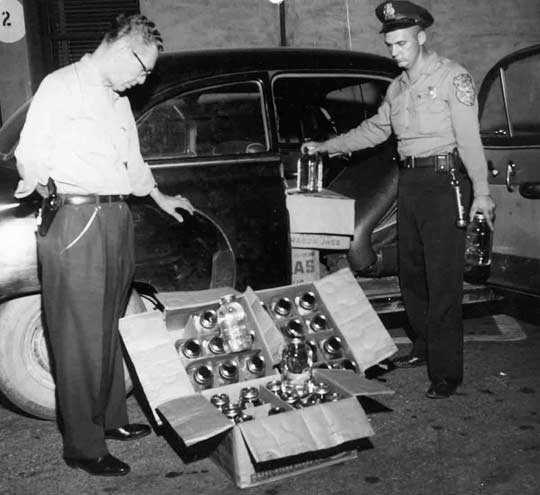 In the 1920s and 1930s, Daytona Beach became known as the place to set world land speed records, supplanting France and Belgium as the preferred location for land speed records, with 8 consecutive world records set between 1927 and 1935. After an historic race between Ransom Olds and Alexander Winton in 1903, the beach became a mecca for racing enthusiasts and fifteen records were set on what became the Daytona Beach road course between 1905 and 1935. By the time the Bonneville Salt Flats became the premier location for pursuit of land speed records, in 1936, Daytona beach had become synonymous with fast cars. Drivers raced a 1.5 to 2-mile (3.2 km) stretch of beach as one straightaway and beachfront highway A1A as the other.
Stock car racing in the United States has its origins in bootlegging during Prohibition, when drivers ran bootleg whiskey made in Appalachia. Bootleggers needed to distribute their illicit products, and they typically used small, fast vehicles to better evade the police. Many of the drivers would modify their cars for speed and handling, as well as increased cargo capacity, and some of them came to love the fast-paced driving down twisty mountain roads. One of the main 'strips' in Knoxville, Tennessee, had its beginning as a mecca for aspiring bootlegging drivers.
The repeal of Prohibition in 1933 dried up some of their business, but by then Southerners had developed a taste for moonshine, and a number of the drivers continued "runnin' shine," this time evading the "revenuers" who were attempting to tax their operations. The cars continued to improve, and by the late 1940's, races featuring these cars were being run for pride and profit. These races were popular entertainment in the rural Southern United States, and they are most closely associated with the Wilkes County region of North Carolina. Most races in those days were of modified street vehicles, lightened and reinforced.
In the 1920s and 1930s, Daytona Beach became known as the place to set world land speed records, supplanting France and Belgium as the preferred location for land speed records, with 8 consecutive world records set between 1927 and 1935. After an historic race between Ransom Olds and Alexander Winton in 1903, the beach became a mecca for racing enthusiasts and fifteen records were set on what became the Daytona Beach road course between 1905 and 1935. By the time the Bonneville Salt Flats became the premier location for pursuit of land speed records, in 1936, Daytona beach had become synonymous with fast cars. Drivers raced a 1.5 to 2-mile (3.2 km) stretch of beach as one straightaway and beachfront highway A1A as the other.
Stock car racing in the United States has its origins in bootlegging during Prohibition, when drivers ran bootleg whiskey made in Appalachia. Bootleggers needed to distribute their illicit products, and they typically used small, fast vehicles to better evade the police. Many of the drivers would modify their cars for speed and handling, as well as increased cargo capacity, and some of them came to love the fast-paced driving down twisty mountain roads. One of the main 'strips' in Knoxville, Tennessee, had its beginning as a mecca for aspiring bootlegging drivers.
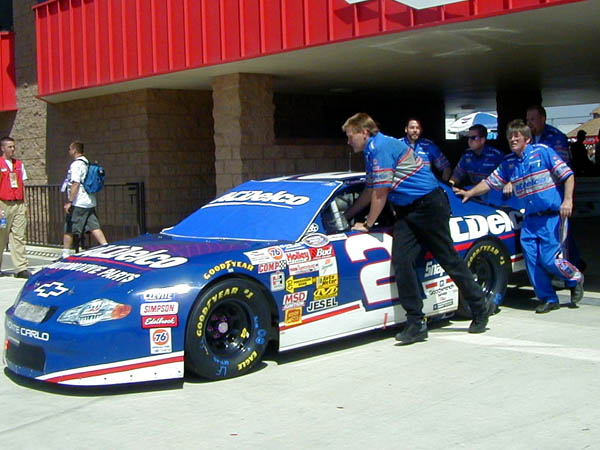
The repeal of Prohibition in 1933 dried up some of their business, but by then Southerners had developed a taste for moonshine, and a number of the drivers continued "runnin' shine," this time evading the "revenuers" who were attempting to tax their operations. The cars continued to improve, and by the late 1940's, races featuring these cars were being run for pride and profit. These races were popular entertainment in the rural Southern United States, and they are most closely associated with the Wilkes County region of North Carolina. Most races in those days were of modified street vehicles, lightened and reinforced.Strictly Stock to Grand National The first NASCAR "Strictly Stock" race ever was held at Charlotte Speedway (not the Charlotte Motor Speedway) on June 19, 1949. Initially, the cars were known as the "Strictly Stock Division" and raced with virtually no modifications on the factory models. This division was renamed "Grand National" beginning in the 1950 season. However, over a period of about a dozen years, modifications for both safety and performance were allowed and, by the mid-1960s, the vehicles were purpose-built race cars with a stock-appearing body. One of the tracks used in the inaugural season is still on today's premier circuit: Martinsville Speedway. Another old track which is still in use is Darlington Raceway, which opened in 1950. The oldest track on today's Sprint Cup circuit is the Indianapolis Motor Speedway which dates back to 1909. Most races were on half-mile to one-mile (800 to 1600 m) oval tracks. However, the first "superspeedway" was built in Darlington, South Carolina, in 1950. This track, at 1.366 miles (2.22 km), was wider, faster and higher-banked than the racers had seen. Darlington was the premiere event of the series until 1959. Daytona International Speedway, a 2.5-mile (4 km) high-banked track, opened in 1959, and became the icon of the sport. The first NASCAR competition held outside of the U.S. was in Canada, where on July 1, 1952, Buddy Shuman won a 200-lap race on a half-mile (800 m) dirt track in Stamford Park, Ontario, near Niagara Falls. Beginning of the modern era 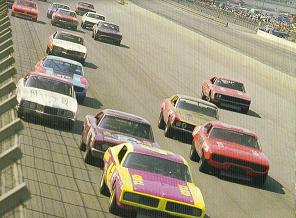 NASCAR made major changes in its structure in the early 1970s. As a result of sponsering from Tobacco companies, the Grand National Series became known as the Winston Cup Series (today called the Sprint Cup Series) starting in 1971, with a new points system and some significant cash benefits to compete for championship points. In 1972, the NASCAR season was shortened from 48 races (including two on dirt tracks) to 31. 1972 is often acknowledged as the beginning of NASCAR's "modern era". The next competitive level, called Late Model Sportsman, gained the "Grand National" title passed down from the top division.
In 1979, the Daytona 500 became the first stock car race that was nationally televised from flag to flag on CBS. The leaders going into the last lap, Cale Yarborough and Donnie Allison, wrecked on the backstretch while dicing for the lead, allowing Richard Petty to pass them both and win the race. Immediately, Yarborough, Allison, and Allison's brother Bobby were engaged in a fistfight on national television. This underlined the drama and emotion of the sport and increased its broadcast marketability. Luckily for NASCAR, the race coincided with a major snowstorm along the United States' eastern seaboard, successfully introducing much of the captive audience to the sport.
NASCAR made major changes in its structure in the early 1970s. As a result of sponsering from Tobacco companies, the Grand National Series became known as the Winston Cup Series (today called the Sprint Cup Series) starting in 1971, with a new points system and some significant cash benefits to compete for championship points. In 1972, the NASCAR season was shortened from 48 races (including two on dirt tracks) to 31. 1972 is often acknowledged as the beginning of NASCAR's "modern era". The next competitive level, called Late Model Sportsman, gained the "Grand National" title passed down from the top division.
In 1979, the Daytona 500 became the first stock car race that was nationally televised from flag to flag on CBS. The leaders going into the last lap, Cale Yarborough and Donnie Allison, wrecked on the backstretch while dicing for the lead, allowing Richard Petty to pass them both and win the race. Immediately, Yarborough, Allison, and Allison's brother Bobby were engaged in a fistfight on national television. This underlined the drama and emotion of the sport and increased its broadcast marketability. Luckily for NASCAR, the race coincided with a major snowstorm along the United States' eastern seaboard, successfully introducing much of the captive audience to the sport.The beginning of the modern era also brought a change in the competitive structure. The purse awarded for championship points accumulated over the course of the season began to be significant. Previously, drivers were mostly concerned about winning individual races. Now, their standing in championship points became an important factor. The "NASCAR Sprint Cup Series" is the sport's highest level of professional competition. It is consequently the most popular and most profitable NASCAR series. The 2006 Sprint Cup season consisted of 36 races over 10 months, with over $4 million in total prize money at stake at each race. Sprint Cup In 2004, NEXTEL took over sponsorship of the premier series from R. J. Reynolds, formally renaming it from the Winston Cup to the NEXTEL Cup Series. A new championship points system, "The Chase for the Nextel Cup " was also developed, which reset the point standings with ten races to go, making only drivers in the top ten or within 400 points of the leader eligible to win the championship. In 2007, NASCAR announced it was expanding "The Chase" from ten to twelve drivers, eliminating the 400-point cutoff, and giving a ten-point bonus to the top twelve drivers for each of the races they have won out of the first 26. Wins throughout the season will also be worth five more points than in previous seasons. In 2008, the premier series title name became the Sprint Cup Series and The Chase for The NEXTEL Cup became the "Sprint For The Cup", as part of the merger between NEXTEL and Sprint. Nationwide Series 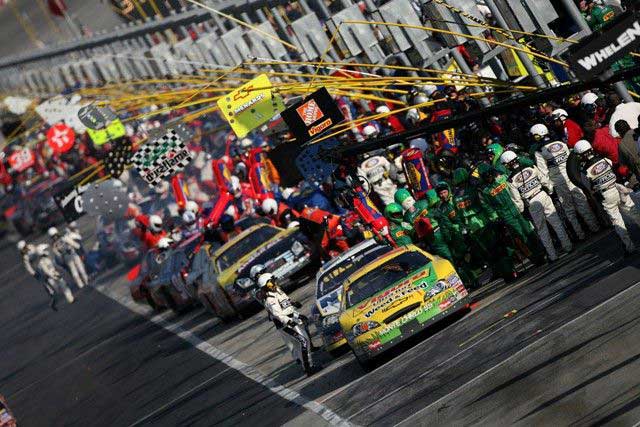 The NASCAR Nationwide Series is the second-highest level of professional competition in NASCAR. The most recent series champion was Clint Bowyer in 2008.
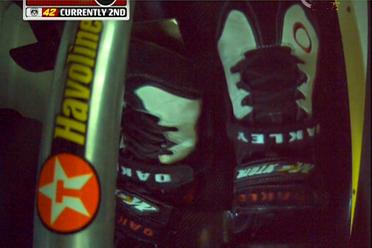
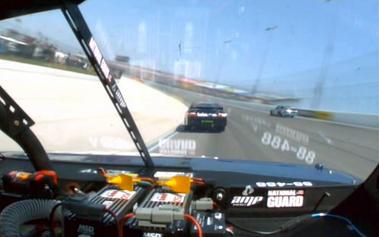
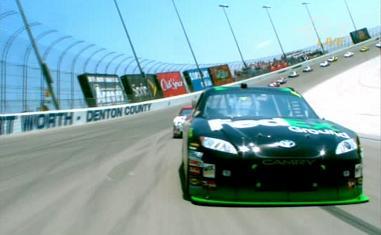
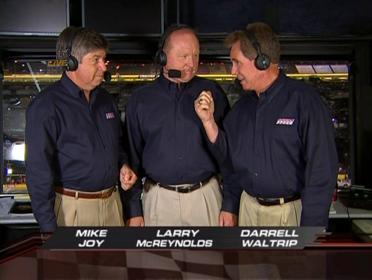
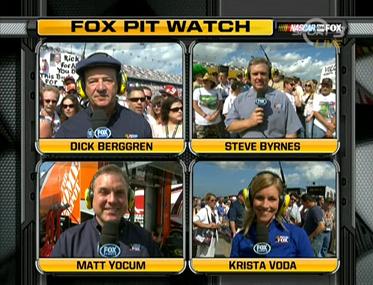
The modern incarnation of this series began in 1982, with sponsorship by Anheuser-Busch Brewing's Budweiser brand. In 1984 it was renamed to the Busch Grand National Series. The Anheuser-Busch sponsorship expired at the end of 2007, and the series is now sponsored by Nationwide Insurance. The Nationwide Series is currently the only series of the top three to race outside the United States. The season is a few races shorter than that of the Sprint Cup, and the prize money is significantly lower. However, over the last several years, a number of Sprint Cup drivers have run both the Nationwide and Sprint Cup series events each weekend, using the Nationwide race as a warm-up to the Cup event at the same facility. Detractors of this practice believe this gives the Sprint Cup teams an unfair advantage, and that the presence of the Sprint Cup drivers squeezes out Nationwide Series competitors who would otherwise be able to qualify. These dual-series drivers have been labeled "Buschwhackers", a play on words which combines the original series sponsor's name with the notion of being bushwhacked. In May 2007, NNS director Joe Balash confirmed that NASCAR is exploring options to deal with the Buschwhacker controversy. Camping World Truck Series 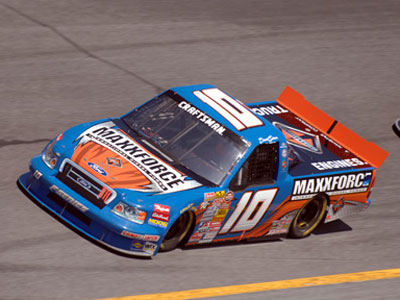 The NASCAR Camping World Truck Series features modified pickup trucks and it is one of the three national divisions of NASCAR. The idea for the Truck Series dates back to 1993. A group of SCORE off-road racers wanted a bigger audience for truck racing. They made a prototype for a NASCAR-style pickup truck. The NASCAR Camping World Truck Series features modified pickup trucks and it is one of the three national divisions of NASCAR. The idea for the Truck Series dates back to 1993. A group of SCORE off-road racers wanted a bigger audience for truck racing. They made a prototype for a NASCAR-style pickup truck. In 1994, NASCAR announced the formation of the NASCAR SuperTruck Series presented by Craftsman. The first series race followed in 1995. In 1996, the series was renamed the NASCAR Craftsman Truck Series to emphasize Craftsman's involvement. In the 2009 season it will be named Camping World Truck Series. The series was first considered something of an oddity or a "senior tour" for NASCAR drivers, but eventually grew in popularity and has produced Sprint Cup series drivers who had never raced in the Nationwide Series. Most races will last around 250 miles at larger tracks, 150 to 200 miles at most others, and 200-250 laps around the shortest tracks. The most recent series champion was Johnny Benson in 2008, and he also won championships in 1996 and 1998. NASCAR on Television The broadcasts of NASCAR are carried on different networks within the United States. FOX, ESPN, ABC, TNT and SPEED carry the broadcasts in turn. A schedule for the Sprint Cup can be found at the NASCAR website. All races are presented in high-definition, and all cameras, including those inside and on top of the race cars, are capable of sending out HD pictures. NASCAR claims to be transmitted in 150 countries, but unfortunately most of those countries only get a SD version, not HD. For each race a crew of 125 to 150 people is necessary to make it all possible. Mike Joy says this on the june 1 2008 broadcast. The season highlight in television ratings, the Daytona 500, has over 90 cameras and over 150 microphones in use. The production army will eventually swell to nearly 300 personnel on race day. To give you an impression, this is what FOX Sports employed for its coverage of the 49th Daytona 500: Seven mobile production units, one graphics truck, one uplink transmission unit, two edit suites, one audio submix truck, and a quad generator capable of outputting nearly a megawatt of power. In addition, the FOX Sports production compound at Daytona International Speedway features six office trailers and support vehicles. This command center directs the following arsenal of production equipment: - 20 Manned cameras - 2 Super slow motion cameras, capturing 180 frames per second - Cablecam - 10 Robotic cameras - 16 In-car camera packages, each featuring three cameras - 6 Stationary Point Of View cameras, including "Grass Cam" and "Wall Cam" - 3 Prerace cameras - 25 Video replay devices with over 72 channels of recording/playout - 43 Race team communication radios, one for each car on the track - Over 150 microphones placed along the track and throughout Daytona International Speedway As far as I can see all HD transmissions are in 720p60 format. This means 1280 by 720 pixels non-interlaced, at 60 frames per second. At 10 bits per pixel (normal studio value) this would sum up to 552 Megabits per second raw output. But that's not all: The incredible sounds that can be heard during a NASCAR race, and especially during the "crank it up" periods in a transmission, are in Dolby 5.1 surround sound. "Crank it up" is a portion of the broadcast in which the announcers in the broadcast booth silently observe the action, while key microphones strategically placed around the track are opened to reveal an amazing surround-sound audio experience. FOX uses the Otari Lightwinder system to get crystal clear sounds all the way to the homes. This achievement has led NASCAR on FOX to two Sports Emmy Awards for Outstanding Sound/Audio. What interests me as a satellite enthousiast, is the way images and sound are being transported to the studio and from there on to the networks. Also I like to find out the way production works for NASCAR, and what equipment is used. The satellite backhaul feeds from the track to the studio's are sometimes Free To Air, sometimes encrypted in BISS. Most Sprint Cup races there is 5.1 surround sound available. The satellites used by the different broadcasters are mainly: - AMC 3 located at 87° West - Galaxy 16 located at 99° West - Galaxy 28 located at 89° West But of course there are more satellites in use. The DirecTV Hotpass Driver subscribers can view 4 driver channels in HD. The studio feed is usually on Galaxy 26 in the C-band, symbolrate 28000. It is an 8PSK DVB-S2 feed with 4 services in it, NASCAR Hot Pass 1 - 4. The main HD studio feed for Sprint Cup races has a symbol rate of about 29000 and is BISS encrypted when Fox is the broadcaster. If you'd like to know more about satellites and the technology involved, visit Arnold's Satellite Site. Gopher Cam - Digger 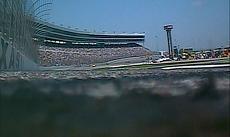 When the Gopher Cam was put to use, for the first time cameras were installed below the surface of a superspeedway track.
These High defenition cameras were also paired with high quality condenser microphones to provide an unbelievable audio/video experience.
Although the wiring and stainless steel housing for the Gopher Cams remain in place after each race, the cameras themselves travel with the broadcasters to the next race location, ready for another gopher-eye view of all the action.
The NASCAR fans were asked to think of a name for the camera, and it was called Digger. When the Gopher Cam was put to use, for the first time cameras were installed below the surface of a superspeedway track.
These High defenition cameras were also paired with high quality condenser microphones to provide an unbelievable audio/video experience.
Although the wiring and stainless steel housing for the Gopher Cams remain in place after each race, the cameras themselves travel with the broadcasters to the next race location, ready for another gopher-eye view of all the action.
The NASCAR fans were asked to think of a name for the camera, and it was called Digger.Digger is a specialized remote-camera system developed by Inertia Unlimited. A component of Telecast's Viper II family of modular fiber optic platforms, the HD POV system carries HD video, audio, and data signals from the Gopher Cams over the NASCAR venue's existing fiber ring. Through bidirectional transmission of data, video engineers are able to control the cameras' paint functions and iris settings remotely The camera hardware and electronics have been installed six inches below the asphalt, and are housed in a cylindrical stainless steel fixture. With some heavy modifications that included building a circuit board to output component HD, Inertia Unlimited was able to build a small 1080i/720p switchable camera that could fit into a cylinder that is four inches in diameter and about four inches tall. The lens is less than a half-inch in diameter. The assembly is covered by a protective dome that is four-inches in diameter and rises less than one-quarter inch above the track surface. Cars rolling over them will have no idea of their presence. Each race the camera is dropped into the cylinder and connected via a 15-pin connector by seven wires that are stacked on top of each other in a one-eighth inch channel. The copper wiring was trenched in below the track and grass and runs to an AJA box that converts the component signal to HD SDI. A Telecast Fiber HD POV link then muxes audio, data, and video into two strands of fiber that run back to the television compound to another Telecast box. One innovation in the camera system is the use of a prism to minimize the camera’s above-surface footprint. With the prism only the custom-designed lens is above the surface (and within a metal plate). Images are then passed through the prism and to the camera but, because of the prism, images are reversed. An Ensemble Designs frame synchronizer flips images back to normal. Cable Cam 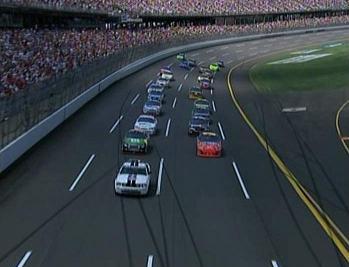 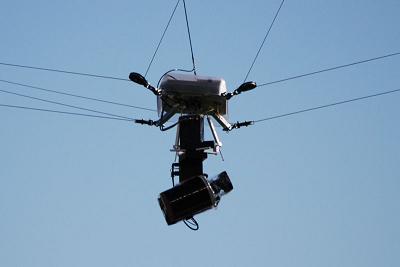 A High Definition camera that was made popular by NFL on Fox is suspended above the race track by a system of cables, puleys and computer-controlled winches. The camera moves within a 250,000-square-foot area covering the front stretch, the start/finish line and pit road.
Skycam is the trademarked brandname of a patented, computer-controlled, stabilized, flying camera system. The system is maneuvered through three dimensions in the open space over a race track by computer-controlled cable-drive system. It is responsible for bringing video-game-like camera angles to television sports coverage. The camera package weighs less than 30 pounds and can travel at 30mph. The system consists of four reels anchored at high fixed points at corners of the grandstand (the cables are attached to fixed spars formed by tall extensible lift platforms when permanent anchors are not available). Each reel is a cable spool with 4.5 horsepower motor and disc brakes with its own computer capable of a .01" positioning resolution. The cable is a braided Kevlar jacketed single mode fiber optic with conductive copper elements and is capable of supporting 600 pounds on a single cable. The 36" tall spar contains the Panasonic HD camera, the pan and tilt motor, and stabilization sensors. Weighing only 25 pounds, the package also includes a power distribution module and electronics for fiber optic signaling. Central control is an industrial grade, Windows XP computer workstation that provides camera flight and video control. Both a pilot (the one who flies the spar in 3D space) and the operator (the one who controls the camera pan, tilt, zoom and focus) use this system for controlling the overall video shot. The central computer system uses a custom software package to control each aspect of the camera system, including motion, video, and obstacle avoidance. Aerial Cam - Blimp 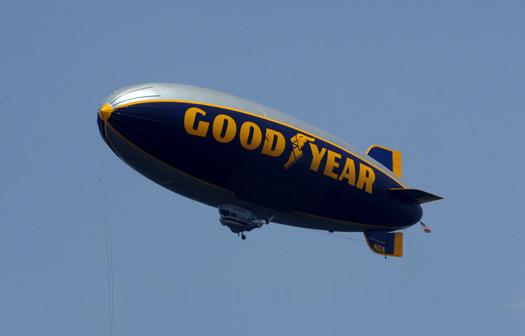 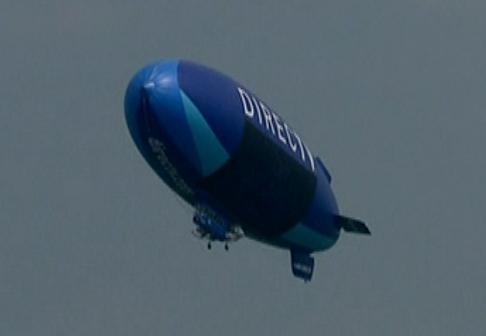 And some of the shots it makes 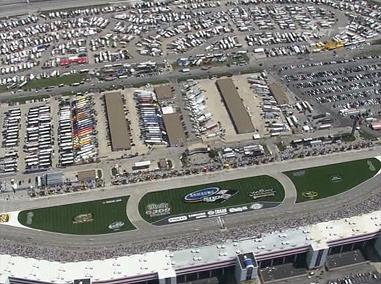 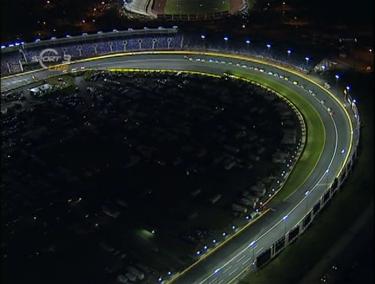
Crane Camera 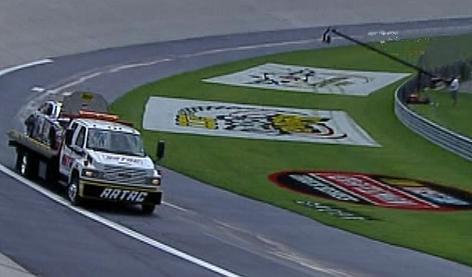 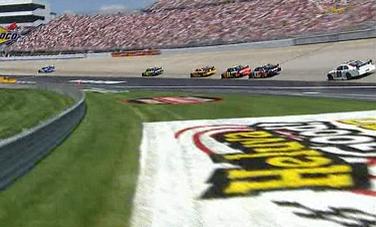
Flagman Camera 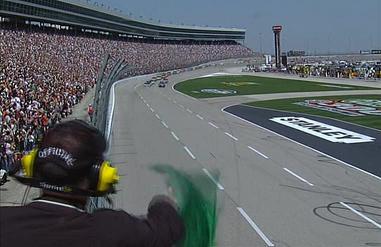
On Wall Camera 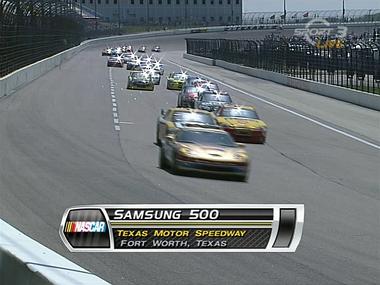
Grass Camera 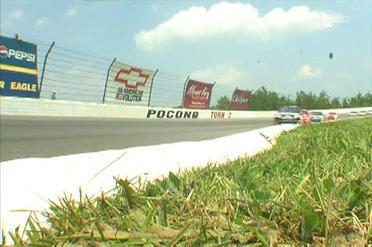 Pit Road Pitlane Crane Camera 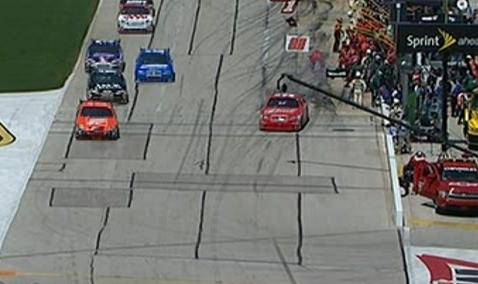
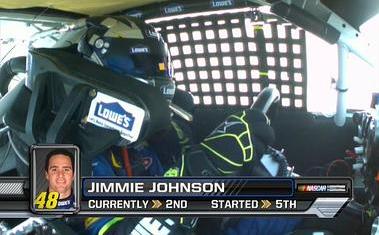
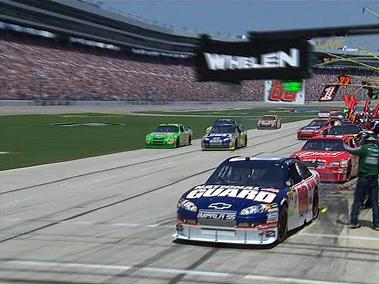 Helmet Camera 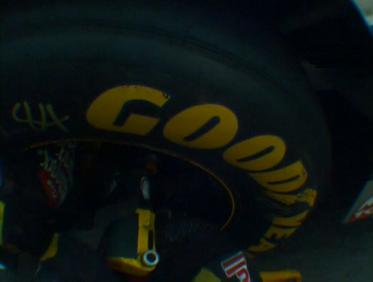
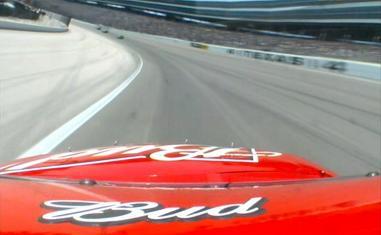
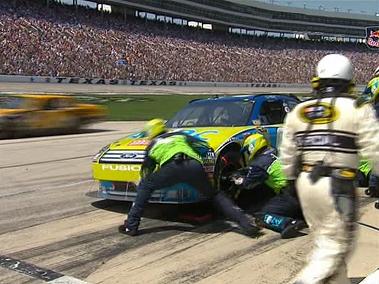 Onboard Cameras 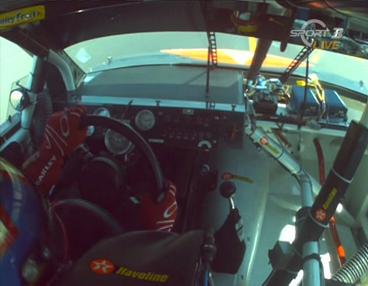
   |
||||||||||||||||||||||||||||||||
| Satlist | |||||||||||||||||||||||||||||||||
| Satlinks | |||||||||||||||||||||||||||||||||
| Dreambox | |||||||||||||||||||||||||||||||||
| NASCAR | |||||||||||||||||||||||||||||||||
| St. Arnold | |||||||||||||||||||||||||||||||||
| Newspapers | |||||||||||||||||||||||||||||||||
| Domains | |||||||||||||||||||||||||||||||||
| Newport | |||||||||||||||||||||||||||||||||
| Honda | |||||||||||||||||||||||||||||||||
| Personal | |||||||||||||||||||||||||||||||||
| NRJ radio | |||||||||||||||||||||||||||||||||
| Spectrum | |||||||||||||||||||||||||||||||||
 |
|||||||||||||||||||||||||||||||||
The content on this website is protected by copyright. All rights reserved. © Arnoldsat |